Last checked
What makes the Khumbu different from Nepal's other trekking regions?
Altitude and infrastructure. The Khumbu puts you higher for longer than anywhere else on a teahouse trail, and it does so with the best-developed lodge network in Nepal, so you get extreme altitude without carrying a tent.
The valley floor at Namche is already higher than most European summits and the standard routes spend days above 4,000 m. That is the attraction and it is also the risk.
Because Everest expeditions have passed through for seventy years, the lodges, bakeries, rescue infrastructure and guiding expertise here are in a different league from the remoter regions.
The cost of that is traffic. In October the main trail to Base Camp is busy from dawn. The Gokyo valley and the high passes are the answer if solitude matters to you.
How do you get to the Everest region?
Almost everyone flies from Kathmandu to Lukla, a 35 minute mountain flight. In the peak spring and autumn months that flight shifts to Ramechhap, a four to five hour drive east of Kathmandu, because of slot restrictions at the capital.
Flights operate in the morning only and are grounded by cloud, so build two spare days into any Khumbu itinerary.
The overland alternative is a long bus to Salleri or Jiri and several extra walking days to reach Lukla on foot. It is cheap, it is beautiful, and it adds a week.
Helicopter charters into Lukla, Namche and Syangboche run year round for those who want to skip the uncertainty, at a price.
Which treks can you do in the Everest region?
Six main routes, from a five day valley walk to a twenty day high-pass circuit. Everest Base Camp is the classic, Gokyo Lakes is the quieter and arguably prettier alternative, and the Three Passes links every valley in the Khumbu into one loop.
Everest Panorama, five days to Tengboche and back, is the one to pick if altitude worries you. It tops out below 3,900 m and still delivers the big views.
Everest Base Camp, fourteen days, is the route most people mean when they say they are trekking in Nepal.
Gokyo Lakes with the Cho La pass, eighteen to nineteen days, adds a chain of glacial lakes and a superb viewpoint at Gokyo Ri.
Three Passes, around twenty days, crosses Renjo La, Cho La and Kongma La and is the definitive Khumbu itinerary for experienced trekkers.
Who lives in the Khumbu?
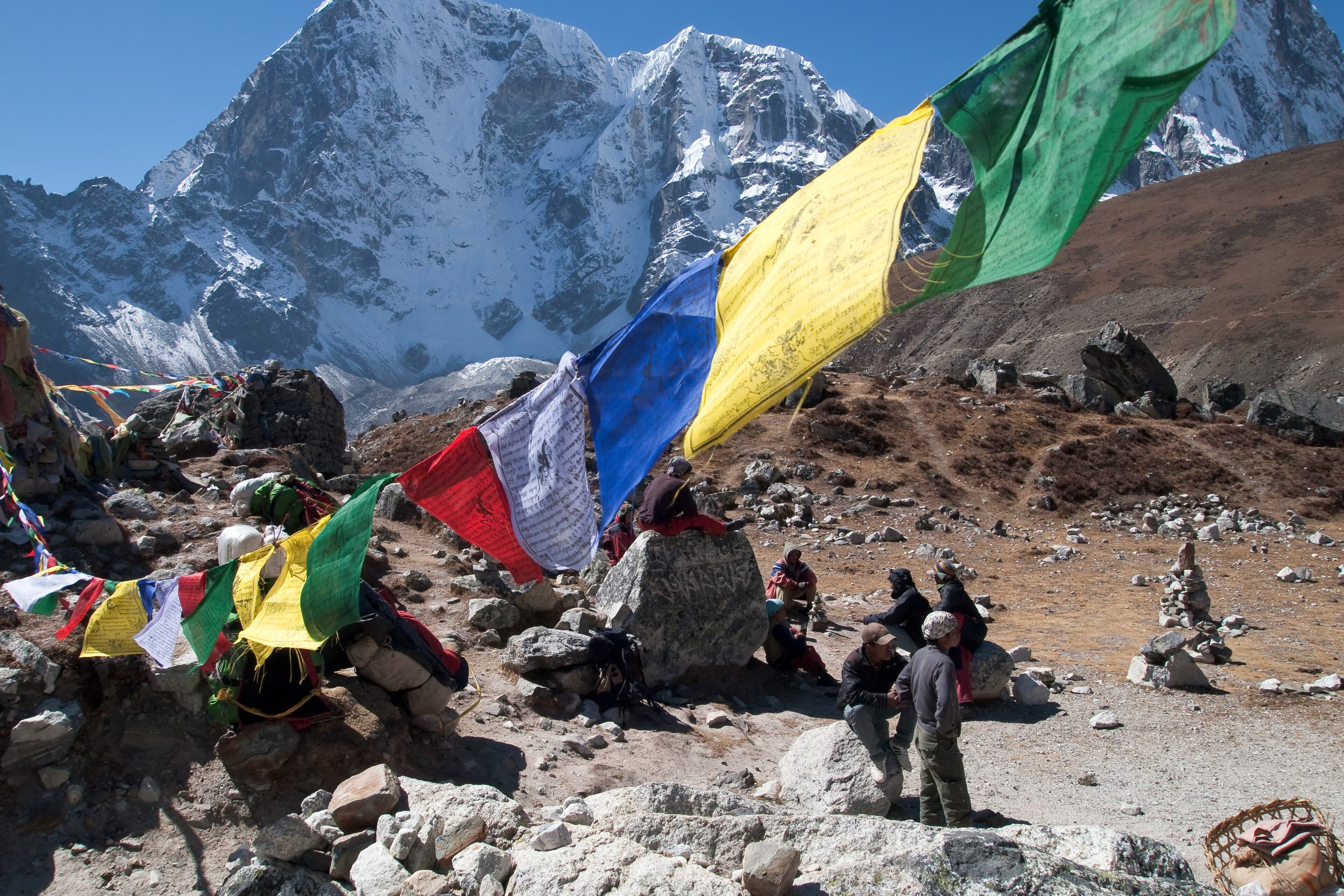
The Khumbu is the homeland of the Sherpa people, who migrated from eastern Tibet several centuries ago and follow Nyingma Buddhism. The monasteries at Tengboche, Pangboche and Thame are working religious centres, not exhibits.
Walk clockwise around mani walls, chortens and prayer wheels. Everyone does it and nobody will explain it to you.
The Mani Rimdu festival at Tengboche, held in the autumn, involves several days of masked dance and is worth timing a trek around.
Sherpa is the working language in the villages, Nepali is the national language and English is spoken by anyone in the tourism trade.
Permits for the Everest Region (Khumbu)
Sagarmatha National Park Entry Permit
Issued by Department of National Parks and Wildlife Conservation
- Foreign
- NPR 3,000
- SAARC
- NPR 1,500
Required for every trail inside the park boundary. Buy in Kathmandu or at Monjo.
Khumbu Pasang Lhamu Rural Municipality Permit
Issued by Khumbu Pasang Lhamu Rural Municipality
- Foreign
- NPR 3,000
- SAARC
- NPR 3,000
Sold only in the region, at Lukla or Monjo. It replaced the TIMS card here.
Places you will pass through
Frequently asked questions
Sources checked
- Sagarmatha National ParkUNESCO, checked 27 September 2026
- Permit fees and regulationsDNPWC Nepal, checked 27 September 2026
Fees and regulations in Nepal change. This page was last verified on 27 September 2026.