Last checked
Key facts
- Duration
- 14 days on the ground, 16 including arrival and departure
- Highest point
- 5,545 m (18,192 ft) at Kala Patthar
- Total distance
- 130 km
- Difficulty
- Strenuous, 4 of 5
- Best months
- March to May and October to November
- Months to avoid
- January and June to August
- Starts and ends
- Lukla (2,860 m) to Lukla (2,860 m)
- Accommodation
- Teahouse lodges
- Permits
- Sagarmatha National Park Entry Permit, Khumbu Pasang Lhamu Rural Municipality Permit
- Typical cost
- $1,250 to $2,400 per person, guided
- Experience needed
- None required. No ropes, crampons or climbing skills are used on the standard route.
How hard is the Everest Base Camp trek?
It is strenuous but not technical. The difficulty comes from sustained daily effort at altitude rather than from anything demanding underfoot, and a reasonably fit walker who trains for three months and takes the acclimatisation days seriously will complete it.
You walk five to seven hours a day for nine days out of fourteen, on rough stone trails with steep ascents and long descents. There is no scrambling, no exposure that would worry a hill walker and no equipment beyond boots and poles.
What people underestimate is the cumulative effect. At Gorak Shep the air holds about half the oxygen it does at sea level, so a gentle rise that you would not notice at home leaves you stopping every twenty paces. Sleep quality drops, appetite drops, and recovery between days slows down.
The best predictor of who finishes is not raw fitness. It is whether they walked slowly enough in the first four days and whether they were honest about symptoms.
When is the best time to trek to Everest Base Camp?
Late March to May and late September to November are the two reliable seasons. Autumn gives the clearest skies and the most stable weather after the monsoon, while spring is warmer, greener and coincides with the Everest climbing expeditions at Base Camp.
Autumn, from late September through November, is the classic window. The monsoon has washed the haze out of the air, visibility is exceptional and temperatures are comfortable. October is the single busiest month on the trail.
Spring, from March to May, brings rhododendron forests in bloom below Tengboche and a Base Camp that is a functioning expedition town rather than bare rock. Afternoon cloud is more common, so the mornings matter more.
Winter in December and January is clear and beautiful but very cold, with many high lodges closed and passes prone to snow. The monsoon from June to August means cloud, leeches below Namche, mud and grounded Lukla flights.
| Season | Months | Conditions | Crowds |
|---|---|---|---|
| Spring | March to May | Warm, rhododendrons, expedition season, afternoon cloud | High |
| Monsoon | June to August | Rain, cloud, flight delays, few views | Very low |
| Autumn | September to November | Clearest air, stable weather, cool nights | Highest |
| Winter | December to February | Clear but very cold, some lodges shut | Low |
How do you avoid altitude sickness on this trek?
Climb slowly, take both acclimatisation days, sleep no more than 500 m higher than the night before above 3,000 m, drink three to four litres a day, and descend the moment symptoms get worse rather than better. Almost every serious case on this route follows from ignoring one of those.
Mild acute mountain sickness is common and not in itself dangerous. Headache, poor sleep, low appetite and breathlessness affect most trekkers somewhere above Dingboche and usually settle within a day at the same altitude.
The warning signs that matter are different. Loss of balance, confusion, a headache that does not respond to painkillers, breathlessness while resting or a persistent wet cough all mean go down now. Descent is the treatment and it works fast.
Acetazolamide can help you acclimatise and is worth discussing with a travel doctor before you leave. It is a tool for a sensible schedule, not a substitute for one.
A good operator checks oxygen saturation daily from Namche upward and carries a pulse oximeter. Ask whether yours does before you book.
How much does the Everest Base Camp trek cost?
A guided 14 day trek booked with a Nepal-based operator typically costs 1,250 to 2,400 USD per person including flights to Lukla, permits, guide, porter, lodging and all meals on the trail. International operators charge roughly double for the same route.
The large fixed costs are the Lukla flights at around 400 USD return, the two permits at about 6,000 Nepali rupees, and the guide and porter wages.
Independent trekkers can bring it under 1,000 USD, but note that Nepal now requires a licensed guide for foreign trekkers in most regions, so the saving is smaller than older blog posts suggest.
Budget a further 15 to 25 USD a day on top of any package for charging, hot showers, WiFi, snacks and drinks. These are never included and they add up over two weeks.
Tips are customary. A common approach is 10 to 15 percent of the trip cost, split between guide and porters and handed over on the last night in Lukla.
| Item | Range |
|---|---|
| Guided package, Nepal operator | 1,250 to 2,400 USD |
| Guided package, Western operator | 2,800 to 5,000 USD |
| Lukla flights, if booked separately | 380 to 450 USD return |
| Permits | About 6,000 NPR, roughly 45 USD |
| Daily extras on trail | 15 to 25 USD per day |
| Tips for the team | 150 to 300 USD |
| Gear rental in Kathmandu | 50 to 120 USD |
What is the accommodation and food like?
You sleep in teahouses, which are family-run mountain lodges with simple twin rooms, shared bathrooms and a heated dining room. Food is a fixed menu across the whole route, built around dal bhat, noodles, soup, potatoes and eggs, with quality and price both rising as you climb.
Rooms are unheated plywood boxes with two beds, a mattress and a blanket. Your sleeping bag does the work. The dining room has a stove, usually lit around five in the evening, and that is where everyone spends the night.
Dal bhat is the practical choice: lentils, rice and vegetables, and refills are free almost everywhere. It is the only meal on the menu designed to be eaten twice a day for two weeks.
Above Dingboche, avoid meat. It is carried up unrefrigerated for days. Stick to vegetarian food from there upward and your stomach will thank you.
Hot showers, charging and WiFi are all paid extras and get steadily more expensive with altitude. At Gorak Shep expect to pay several dollars simply to charge a phone.
Do you need a guide for Everest Base Camp?
Yes. Nepal requires foreign trekkers to use a licensed guide in national park trekking regions, and beyond the rule it is the right call. A guide manages permits, lodge bookings in peak season, altitude monitoring and the decision-making if something goes wrong.
Rules on independent trekking have tightened in recent years, so check the current position with the Nepal Tourism Board before assuming an older blog post still applies.
The practical argument is stronger than the legal one. In October every lodge from Dingboche upward fills by mid-afternoon and a guide with relationships gets you a room.
Porters are optional but transform the trek. Carrying 15 kg yourself at 5,000 m is a different activity from carrying 6 kg. Hiring one also puts money directly into the local economy.
Book with an operator registered with the Nepal Tourism Board and the Trekking Agencies Association of Nepal, and ask directly whether the guide is insured and first aid trained.
How reliable are the Lukla flights?
They are reliable in good weather and completely grounded in bad. Flights only operate in the morning, cancellations of a day or more are normal in the shoulder seasons, and during the peak months departures shift to Ramechhap, a four to five hour drive from Kathmandu.
Tenzing-Hillary Airport has a short sloping runway hemmed in by terrain and no instrument approach, so pilots need visual conditions. Cloud means nothing flies.
Build two contingency days into your trip, one at each end. This is the most common planning mistake on the route and the most expensive one.
Helicopter shares are widely available when fixed-wing flights are grounded and cost around 500 USD per seat. Many travel policies reimburse this only if it was medically necessary, not merely convenient.
During spring and autumn the Kathmandu slot restrictions push Lukla traffic to Ramechhap, which means a 1 am departure by road. Ask your operator which airport you are actually flying from.
What are the alternatives to the standard route?
If the classic out-and-back does not suit, the Gokyo Lakes variant adds turquoise glacial lakes and the Cho La pass, the Three Passes circuit is the full high-altitude loop, and Everest Panorama gives you the views in five days without going above 3,900 m.
Gokyo Lakes and Cho La, at 18 to 19 days, is the best value upgrade. It sees a fraction of the traffic, adds Gokyo Ri as a viewpoint that rivals Kala Patthar, and rejoins the main trail near Lobuche.
The Three Passes trek at around 20 days crosses Renjo La, Cho La and Kongma La, and is the definitive Khumbu itinerary for experienced trekkers.
Everest Panorama runs Lukla to Tengboche and back in five days. Low altitude, low risk, and it still delivers the Ama Dablam and Everest views that most people actually came for.
Helicopter day tours to Base Camp exist. They are quick, expensive, and they miss the point entirely.
Everest Base Camp Trek itinerary, day by day
The full 14 day schedule, with sleeping altitude, walking hours and overnight stop for every day. The acclimatisation days are the ones that decide whether people finish.
Day 1
Fly to Lukla, walk to Phakding
- 2,610 m
- Down 250 m
- 6.2 km
- 3 to 4 h
- Sleep: Phakding
A short flight onto one of the world's most talked about runways, then an easy downhill walk along the Dudh Koshi to settle the nerves.
Read the dayShow less
In the busy months the Lukla flight often shifts to Ramechhap, four to five hours by road from Kathmandu, which means a very early start. Build a spare day into your trip for this alone.
The first afternoon is deliberately gentle. You lose height rather than gain it, which is the right way to begin, and the trail is wide, busy and full of mule trains.
Phakding sits by the river and is warm enough that most people sleep well. Eat a big dinner. Appetite fades fast above 4,000 m and this is your last easy meal.
Transport: 35 minute mountain flight to Lukla
Highlight: First sight of the Dudh Koshi running glacier-blue under the suspension bridges
Day 2
Phakding to Namche Bazaar
- 3,440 m
- Up 830 m
- 10.9 km
- 6 to 7 h
- Sleep: Namche Bazaar
The day that sorts people out. Five river crossings, the park checkpost at Monjo, then the long relentless climb to Namche.
Read the dayShow less
You cross the Hillary Bridge high above the confluence, then start a two hour ascent with almost no flat ground. Take it slower than feels natural.
Roughly halfway up, on a clear morning, there is a gap in the trees with the first view of Everest's summit pyramid behind the Nuptse wall. It is small and easy to miss.
Namche is a horseshoe of lodges, bakeries, gear shops and cash machines built into a natural amphitheatre. It is the last place with reliable banking and decent equipment.
Highlight: First view of Everest from the Top Danda viewpoint
Day 3, acclimatisation
Acclimatisation day in Namche
- 3,440 m
- Rest day
- 5 km
- 3 h
- Sleep: Namche Bazaar
A rest day that is not a rest day. You climb to around 3,880 m and come back down, which is exactly how acclimatisation works.
Read the dayShow less
Walk up to the Everest View Hotel or out to the twin villages of Khumjung and Khunde. Both put you several hundred metres higher for a couple of hours.
Climb high, sleep low. Sitting in the lodge all day feels restful and acclimatises you considerably worse.
Use the afternoon to hire anything you are missing. Down jacket and sleeping bag rental in Namche is cheap and saves carrying them from home.
Highlight: The Sherpa Culture Museum and the panorama terrace above town
Day 4
Namche to Tengboche
- 3,867 m
- Up 427 m
- 9.2 km
- 5 to 6 h
- Sleep: Tengboche
A beautiful contouring trail with Ama Dablam ahead the whole way, then a steep drop to the river and a hard climb to the monastery.
Read the dayShow less
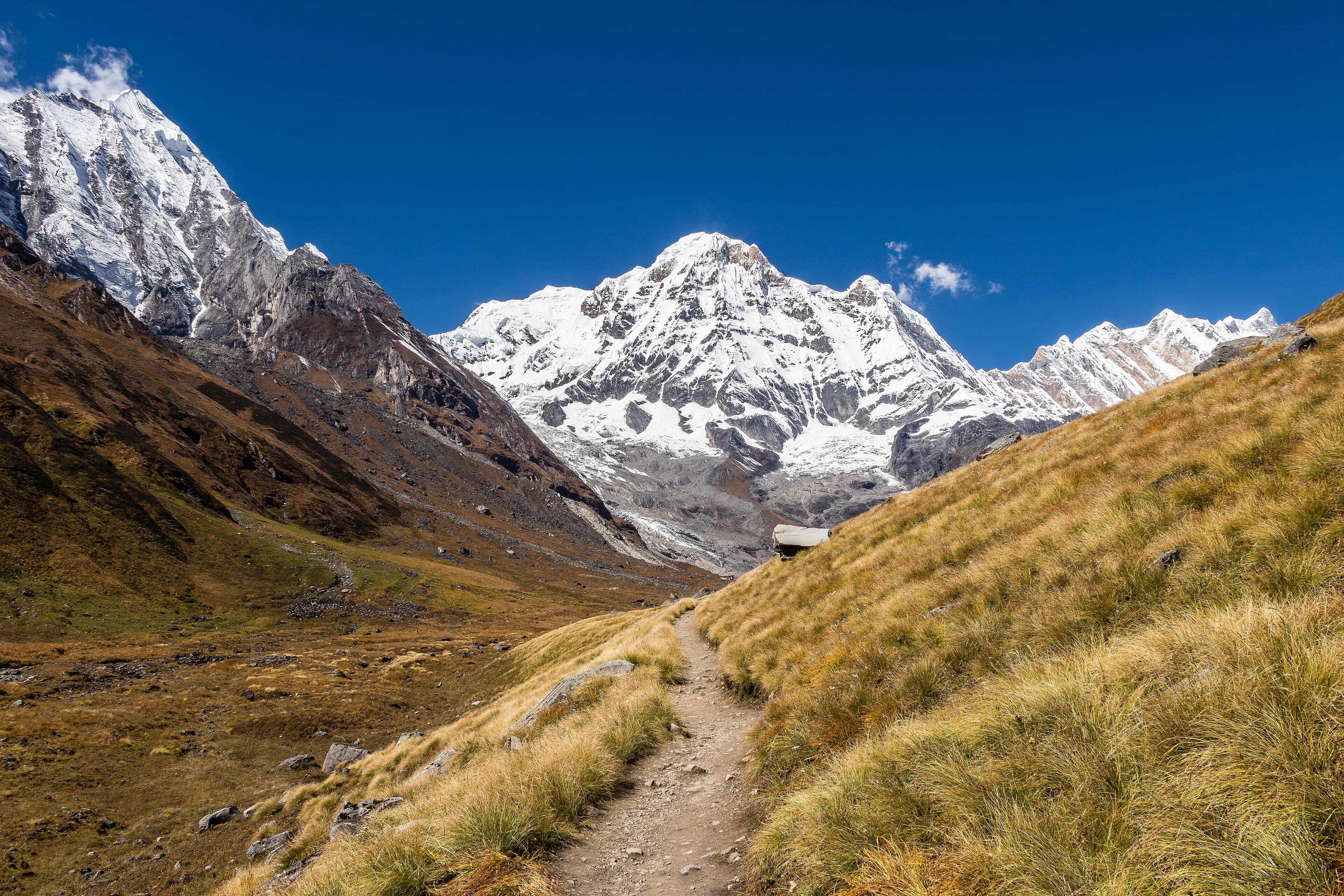
The first two hours are almost level, cut into the hillside with Everest, Lhotse and Ama Dablam lined up across the valley. This is the prettiest walking on the route.
Then you lose 600 m down to Phunki Tenga and climb every metre of it back up through rhododendron forest to the monastery bench.
Tengboche Monastery holds a short public prayer service in the late afternoon. It is cold, it is worth it, and photography inside is not allowed.
Highlight: Afternoon prayers at Tengboche Monastery with Ama Dablam behind it
Day 5
Tengboche to Dingboche
- 4,410 m
- Up 543 m
- 11 km
- 5 to 6 h
- Sleep: Dingboche
The last of the forest gives way to scrub and stone. From here up it is high alpine and it feels like it.
Read the dayShow less
Through Deboche and Pangboche, where a short detour reaches the oldest monastery in the Khumbu.
The valley opens out above Pangboche and the trees stop. Wind becomes a daily factor and the temperature drops sharply the moment the sun goes behind a ridge.
Dingboche is a windy patchwork of stone-walled potato fields at 4,410 m. Most people notice the altitude here for the first time, usually as a light headache or broken sleep.
Highlight: Ama Dablam from the Imja valley, seen from its steeper north side
Day 6, acclimatisation
Acclimatisation day in Dingboche
- 4,410 m
- Rest day
- 4.5 km
- 3 to 4 h
- Sleep: Dingboche
Second acclimatisation stop. A hard, short climb up Nangkartshang ridge to around 5,000 m and straight back down.
Read the dayShow less
It is steep from the first step and it will feel much harder than the distance suggests. That is the point. Two hours at 5,000 m now makes Lobuche and Gorak Shep possible later.
On a clear day the ridge gives you Makalu, the fifth highest mountain in the world, off to the east.
Drink three to four litres today. Dehydration and altitude illness look almost identical in the early stages and one of them is easily avoidable.
Highlight: Makalu and Island Peak from Nangkartshang
Day 7
Dingboche to Lobuche
- 4,940 m
- Up 530 m
- 8.5 km
- 5 h
- Sleep: Lobuche
Open moorland to Thukla, a punishing short climb to the memorial pass, then a flat walk beside the Khumbu Glacier.
Read the dayShow less
The Thukla climb is only 45 minutes but at this height it is the hardest 45 minutes of the trek for most people.
At the top is Thukla Pass, a field of stone memorials to climbers and Sherpas who died on Everest. It is quiet and it changes the mood of the group.
Lobuche is a handful of cold lodges pressed against the glacier moraine. Expect a poor night's sleep and do not panic about it.
Highlight: The memorials at Thukla Pass
Day 8
Lobuche to Gorak Shep, then Everest Base Camp
- 5,364 m
- Up 424 m
- 13 km
- 7 to 8 h
- Sleep: Gorak Shep
The big day. Glacier moraine to Gorak Shep, drop the bags, then out and back to Base Camp at 5,364 m.
Read the dayShow less
The trail to Gorak Shep weaves through unstable moraine and takes longer than the distance implies. Arrive, eat, leave your pack.
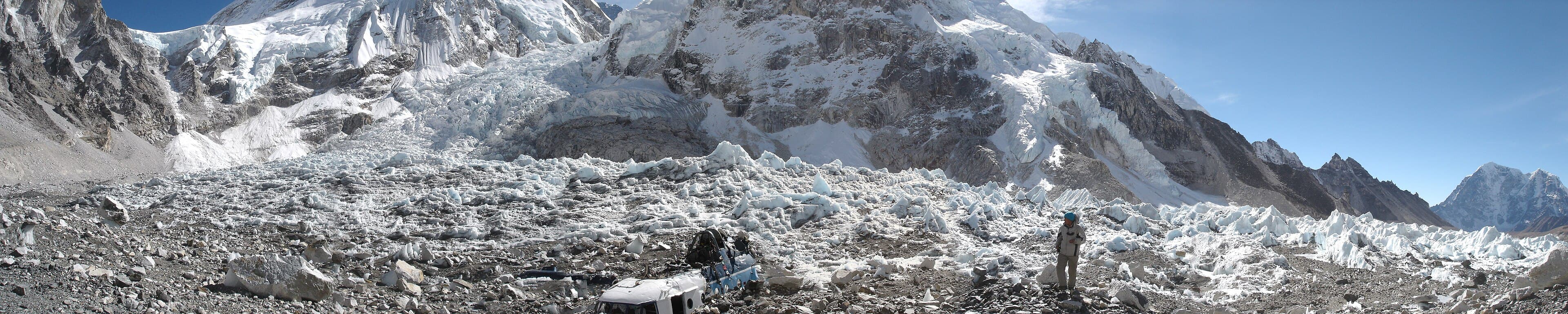
Base Camp itself is a stretch of rubble on the glacier below the Khumbu Icefall. In spring it is a small town of expedition tents. Outside the climbing season it is bare ice and prayer flags.
Everest is not visible from Base Camp. Nuptse and the icefall block it, which surprises almost everyone. Kala Patthar tomorrow is where you actually see it.
Highlight: Standing on the Khumbu Glacier at Everest Base Camp
Day 9
Kala Patthar at sunrise, descend to Pheriche
- 4,371 m
- Down 1,174 m
- 16 km
- 7 to 8 h
- Sleep: Pheriche
A pre-dawn climb to 5,545 m for the best Everest view on the trek, then a long, welcome descent into thicker air.
Read the dayShow less
You start around 4:30 am in the dark and the cold. It is a 90 minute to two hour grind up a rocky cone and it is the hardest single effort of the trek.
From the top you get Everest, Nuptse, Pumori, Changtse and the whole Khumbu Glacier laid out below. This is the photograph everyone comes for.
Then you go down, a long way down, and every hour of it feels better than the last. Pheriche has the Himalayan Rescue Association aid post if anyone needs it.
Highlight: Sunrise on Everest from Kala Patthar, 5,545 m
Day 10
Pheriche to Namche Bazaar
- 3,440 m
- Down 931 m
- 19 km
- 7 h
- Sleep: Namche Bazaar
A long descent back through Tengboche and the forest, retracing the route with completely different weather and completely different legs.
Read the dayShow less
Distance is high but you are dropping nearly a kilometre of altitude and you will feel stronger every hour.
The climb back up from Phunki Tenga to Tengboche is the only real effort of the day.
Namche in the evening after nine days above it is a genuine luxury. Hot shower, a bakery, a beer if you want one.
Day 11
Namche to Lukla
- 2,860 m
- Down 580 m
- 17 km
- 6 to 7 h
- Sleep: Lukla
The last walking day. Down to the river, back across the bridges and a final undulating stretch to Lukla.
Read the dayShow less
Longer than it looks, with a lot of small climbs in the final two hours that nobody warns you about.
It is traditional to buy the guides and porters a round in Lukla. Cash tips are usually given tonight rather than at the airport.
Day 12
Fly Lukla to Kathmandu
- 1,400 m
- Down 1,460 m
- Sleep: Kathmandu
Morning flights only, because the Lukla wind picks up before noon. Delays are normal and occasionally run to days.
Read the dayShow less
Flights go in the morning or not at all. If the cloud sits low, nothing moves.
Helicopter transfers out are widely available and cost roughly 500 USD per seat if you are on a hard deadline.
Never book an international flight home for the same day you fly out of Lukla. Leave two clear days.
Transport: 35 minute flight, or road transfer from Ramechhap
Day 13, acclimatisation
Contingency and rest day in Kathmandu
- 1,400 m
- Rest day
- Sleep: Kathmandu
The buffer day that absorbs a Lukla weather delay. If the flights ran on time, it becomes a free day in the valley.
Read the dayShow less
Boudhanath at dusk, Patan Durbar Square, or simply a long lunch and a massage in Thamel.
This day is not optional padding. It is the difference between a delay being an inconvenience and a delay costing you an international flight.
Day 14
Departure
- 1,400 m
- Rest day
- Sleep: Departure
Transfer to the airport three hours before your flight.
Read the dayShow less
Tribhuvan is slow at peak times and the queues outside the terminal are real.
What is included and what is not
The walking itself is rarely technical. What makes it hard is doing five to seven hours a day, back to back, in air that holds roughly half the oxygen you are used to at sea level.
Included in a guided price
Airport transfers
Private vehicle for all arrivals and departures in Kathmandu.
Kathmandu accommodation
Three nights in a three star hotel on a twin-share basis with breakfast.
Lukla flights
Round trip Kathmandu or Ramechhap to Lukla, including the road transfer when flights are rescheduled.
Teahouse accommodation
Eleven nights on the trail, twin share, best available lodge in each village.
All meals on trek
Breakfast, lunch and dinner from the lodge menu for every day between Lukla and Lukla.
Licensed guide
Government-licensed, English-speaking guide with wilderness first aid training, including their wage, insurance, food and lodging.
Porter support
One porter per two trekkers, carrying up to 20 kg in total.
Both permits
Sagarmatha National Park entry and Khumbu Pasang Lhamu Rural Municipality permit.
Safety equipment
Pulse oximeter, first aid kit and daily oxygen saturation checks from Namche upward.
Duffel and route map
Yours to keep.
Not included, budget for it
International flights
To and from Kathmandu.
Nepal visaabout $50
Issued on arrival. 30 days currently costs 50 USD, payable in cash.
Travel insurance
Mandatory. It must cover trekking to 6,000 m and helicopter evacuation, which standard policies rarely do.
Hot showers and chargingabout $3 to 8 per use
Charged separately by the lodges and the price climbs with altitude.
WiFiabout $10 to 25
Everest Link or Airlink data cards, sold in the lodges.
Drinking water
Bottled water is expensive and environmentally poor above Namche. Bring purification tablets or a filter.
Drinks and snacks
Anything outside the set menu, including soft drinks, beer, bars and bakery items.
Personal gear
Boots, down jacket, sleeping bag. Rental in Kathmandu or Namche is cheap.
Tips
Customary for guide and porters. Budget roughly 10 to 15 percent of the trip cost across the team.
Emergency evacuation
Covered by your insurance, not by the trip price.
Permits for the Everest Base Camp Trek
Sagarmatha National Park Entry Permit
Issued by Department of National Parks and Wildlife Conservation
- Foreign
- NPR 3,000
- SAARC
- NPR 1,500
Buy it at the Nepal Tourism Board in Kathmandu or at the Monjo checkpost on day two. Bring a passport photo and the exact cash in rupees.
Khumbu Pasang Lhamu Rural Municipality Permit
Issued by Khumbu Pasang Lhamu Rural Municipality
- Foreign
- NPR 3,000
- SAARC
- NPR 3,000
Replaced the old TIMS card for this region. It is only sold locally, at Lukla or Monjo, so do not waste time hunting for it in Kathmandu.
What to pack
You should be able to walk six hours on hilly ground with a light daypack, on consecutive days, without needing a rest day afterwards. Three months of hill walking or stair training before you fly is the single best preparation.
Upper body
- Two merino or synthetic base layer tops
- Fleece or light insulated midlayer
- Down jacket rated to minus 15 C, rentable in Kathmandu
- Waterproof and windproof shell
- Sun hat and warm beanie
- Liner gloves and insulated outer gloves
- Buff or neck gaiter for dust below Namche
Lower body
- Two pairs of trekking trousers
- Thermal base layer bottoms
- Waterproof overtrousers
- Four pairs of wool trekking socks
- Underwear for four days, washed as you go
Footwear
- Broken-in waterproof boots with ankle support
- Lightweight camp shoes or sandals
- Gaiters for the higher sections in snow
Sleep and carry
- Sleeping bag rated to minus 15 C
- Silk or fleece liner
- 30 to 35 litre daypack with rain cover
- Duffel bag up to 20 kg for the porter
Health and safety
- Personal medication with spares
- Acetazolamide, discussed with your doctor before you travel
- Ibuprofen, rehydration salts, anti-diarrhoeal
- Blister kit and tape
- Water purification tablets or a UV or filter bottle
- SPF 50 sunscreen and SPF lip balm
- Category 4 sunglasses for the glacier
Practical
- Headtorch with spare batteries
- 20,000 mAh power bank, kept warm inside your jacket overnight
- Universal adapter
- Nepali rupees in cash, since Namche has the last reliable ATM
- Passport, two spare photos, insurance documents, paper and digital
Frequently asked questions
Sources checked
- Sagarmatha National Park permits and feesDepartment of National Parks and Wildlife Conservation, Nepal, checked 27 September 2026
- Trekking regulations and licensed guide requirementNepal Tourism Board, checked 27 September 2026
- Altitude illness guidance and Pheriche aid postHimalayan Rescue Association Nepal, checked 27 September 2026
- Sagarmatha National Park World Heritage listingUNESCO, checked 27 September 2026
Fees and regulations in Nepal change. This page was last verified on 27 September 2026.