Last checked Due a review
Key facts
- Duration
- 5 to 7 days from Pokhara and back
- Highest point
- 4,500 m (14,764 ft) at Mardi Himal High Camp
- Total distance
- 55 km
- Difficulty
- Moderate, 2 of 5
- Best months
- March to April and October to December
- Months to avoid
- January and June to August
- Starts and ends
- Kande (1,750 m) or Forest Camp via taxi from Pokhara to Sidhing (1,870 m) or back to Pokhara via Lwang
- Accommodation
- Teahouse lodges
- Permits
- Annapurna Conservation Area Permit (ACAP), TIMS Card
- Typical cost
- $400 to $700 per person, guided
- Experience needed
- No prior high-altitude experience required, but experience of multi-day trekking is helpful.
Should I choose Mardi Himal or Annapurna Base Camp?
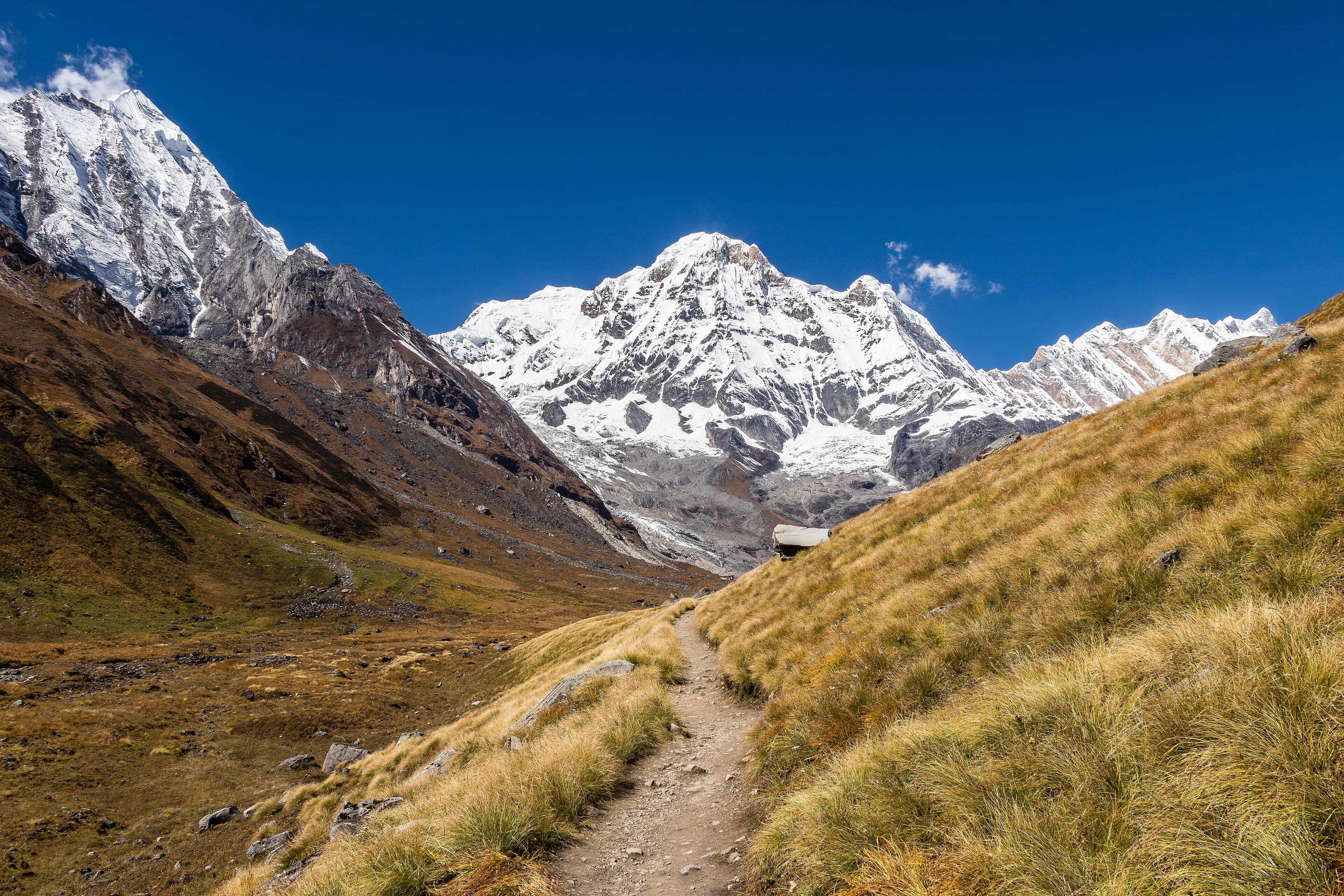
Mardi Himal is shorter, quieter, and offers a more intimate view of Machhapuchhre. Annapurna Base Camp offers the full Annapurna Sanctuary amphitheater experience. Choose based on time, preference for crowds, and what you want to see.
Mardi Himal is the better choice for trekkers with 5 to 6 days, those who prefer less-crowded trails, and those specifically interested in Machhapuchhre (which from High Camp appears almost overwhelmingly close).
Annapurna Base Camp is the better choice for the full 360-degree Himalayan amphitheater experience, the scale of the sanctuary, and the cultural richness of Chhomrong. It requires 10 to 12 days and is more crowded.
Mardi Himal Trek itinerary, day by day
The full 6 day schedule, with sleeping altitude, walking hours and overnight stop for every day. The acclimatisation days are the ones that decide whether people finish.
Day 1
Pokhara to Forest Camp
- 2,550 m
- Up 800 m
- 12 km
- 4 to 5 h
- Sleep: Forest Camp
Begin at Kande and climb through the Australian Base Camp viewpoint to Forest Camp.
Read the dayShow less
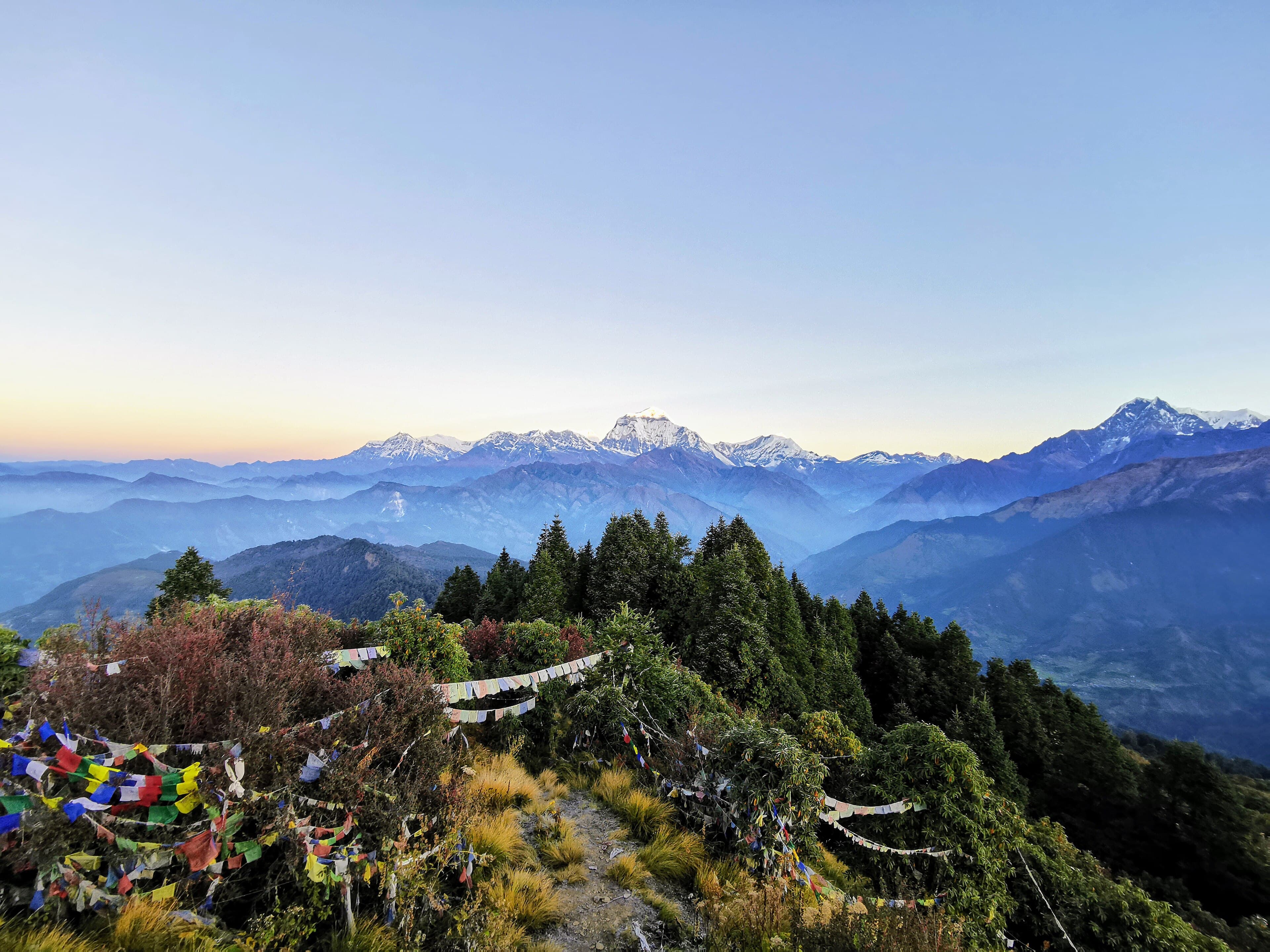
Take a taxi to the Kande trailhead. The trail climbs through the Australian Camp viewpoint (2,000 m) with views of Machhapuchhre. Continue through dense oak and rhododendron forest to Forest Camp.
Transport: Taxi to Kande (30 minutes), then trekking
Day 2
Forest Camp to Low Camp
- 3,150 m
- Up 600 m
- 8 km
- 3 to 4 h
- Sleep: Low Camp
Continue up the Mardi Himal ridge through upper forest to Low Camp.
Read the dayShow less
The ridge narrows and the views begin to open. Machhapuchhre starts to dominate the view ahead. Low Camp has several teahouses and is the main staging point for High Camp acclimatisation.
Day 3
Low Camp to High Camp
- 4,500 m
- Up 1,350 m
- 10 km
- 5 to 6 h
- Sleep: High Camp
The main summit day. Climb to High Camp for the extraordinary close-range views of Machhapuchhre and Mardi Himal.
Read the dayShow less
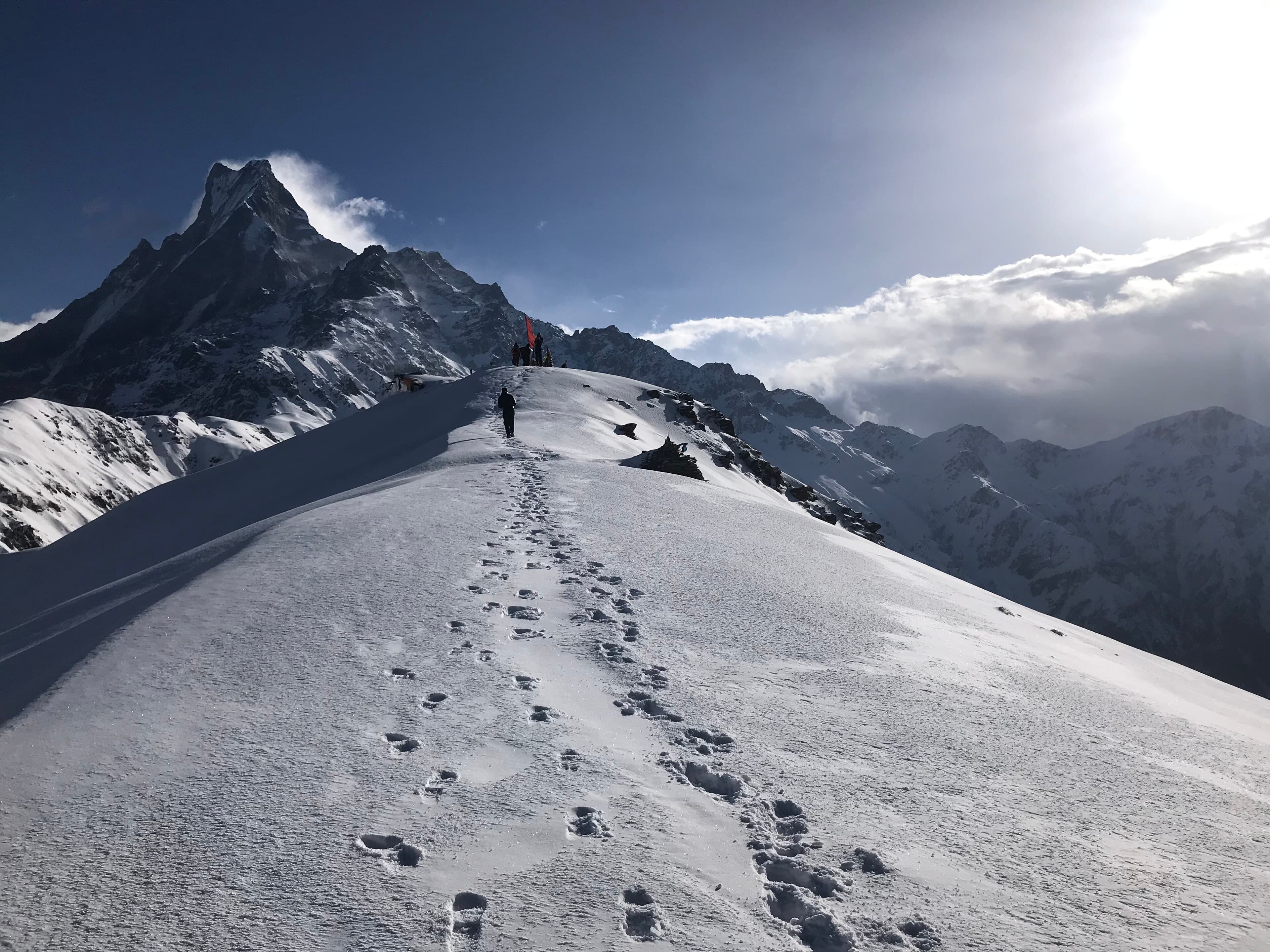
The trail above Low Camp enters open alpine terrain. The final approach to High Camp crosses steep grassy slopes. The teahouses at High Camp are simple but the views are extraordinary — Machhapuchhre appears almost close enough to touch from the ridge.
Highlight: High Camp: closest accessible viewpoint of Machhapuchhre (6,993 m), the 'Fishtail'
Day 4
High Camp to Mardi Himal Base Camp viewpoint and return to Low Camp
- 3,150 m
- Down 1,350 m
- 14 km
- 6 to 7 h
- Sleep: Low Camp
Optional push to the Mardi Himal Base Camp viewpoint at 4,780 m before descending to Low Camp.
Read the dayShow less
Sunrise at High Camp is exceptional. Option to continue up the ridge toward Mardi Himal Base Camp at 4,780 m — a two-hour additional climb with even closer peak views. Return to High Camp for breakfast then descend to Low Camp.
Day 5
Low Camp to Sidhing
- 1,870 m
- Down 1,280 m
- 10 km
- 4 to 5 h
- Sleep: Sidhing
Descend by the eastern route through Gurung villages to Sidhing.
Read the dayShow less
The descent via Sidhing passes through Gurung farming communities with views of Annapurna South. Sidhing is a small village accessible by vehicle to Pokhara.
Day 6
Sidhing to Pokhara
- 827 m
- Down 1,043 m
- 25 km
- Sleep: Pokhara
Return to Pokhara by vehicle from Sidhing.
Read the dayShow less
A jeep can be arranged from Sidhing directly to Pokhara Lakeside. Arrive by late morning.
Transport: Jeep from Sidhing to Pokhara (2 hours)
What is included and what is not
The High Camp altitude of 4,500 m requires good acclimatisation and cold-weather preparation. The trails are well-marked but steeper than Poon Hill.
Included in a guided price
Permitsabout $$35
ACAP and TIMS
Accommodationabout $$50–75
5 nights teahouse twin-share
Mealsabout $$50–75
Breakfast and dinner on trail
Guideabout $$130–180
Licensed guide
Porterabout $$100–140
One per two trekkers
Not included, budget for it
Pokhara-Kande taxi
Approximately NPR 1,000
Travel insurance
Recommended
Personal gear
Sleeping bag, warm layers
Permits for the Mardi Himal Trek
Annapurna Conservation Area Permit (ACAP)
Issued by National Trust for Nature Conservation
- Foreign
- NPR 3,000
- SAARC
- NPR 1,500
Buy at the NTNC office in Pokhara Lakeside before departure.
TIMS Card
Issued by Nepal Tourism Board
- Foreign
- NPR 2,000
- SAARC
- NPR 1,000
Obtainable at NTB offices in Kathmandu or Pokhara.
What to pack
Moderate fitness. The High Camp day requires sustained uphill effort at altitude. Trekkers should be comfortable with 5 to 6 hour hiking days.
Clothing
- Down jacket or warm fleece
- Waterproof shell
- Warm hat and gloves (essential for High Camp)
- Trekking trousers
- Base layers
Footwear
- Waterproof trekking boots
- Trekking socks (3 pairs)
Equipment
- Trekking poles
- Sleeping bag -10°C
- Daypack
- Headtorch
Frequently asked questions
Sources checked
- NTNC Annapurna Conservation AreaNational Trust for Nature Conservation, checked 5 January 2025
Fees and regulations in Nepal change. This page was last verified on 5 January 2025.